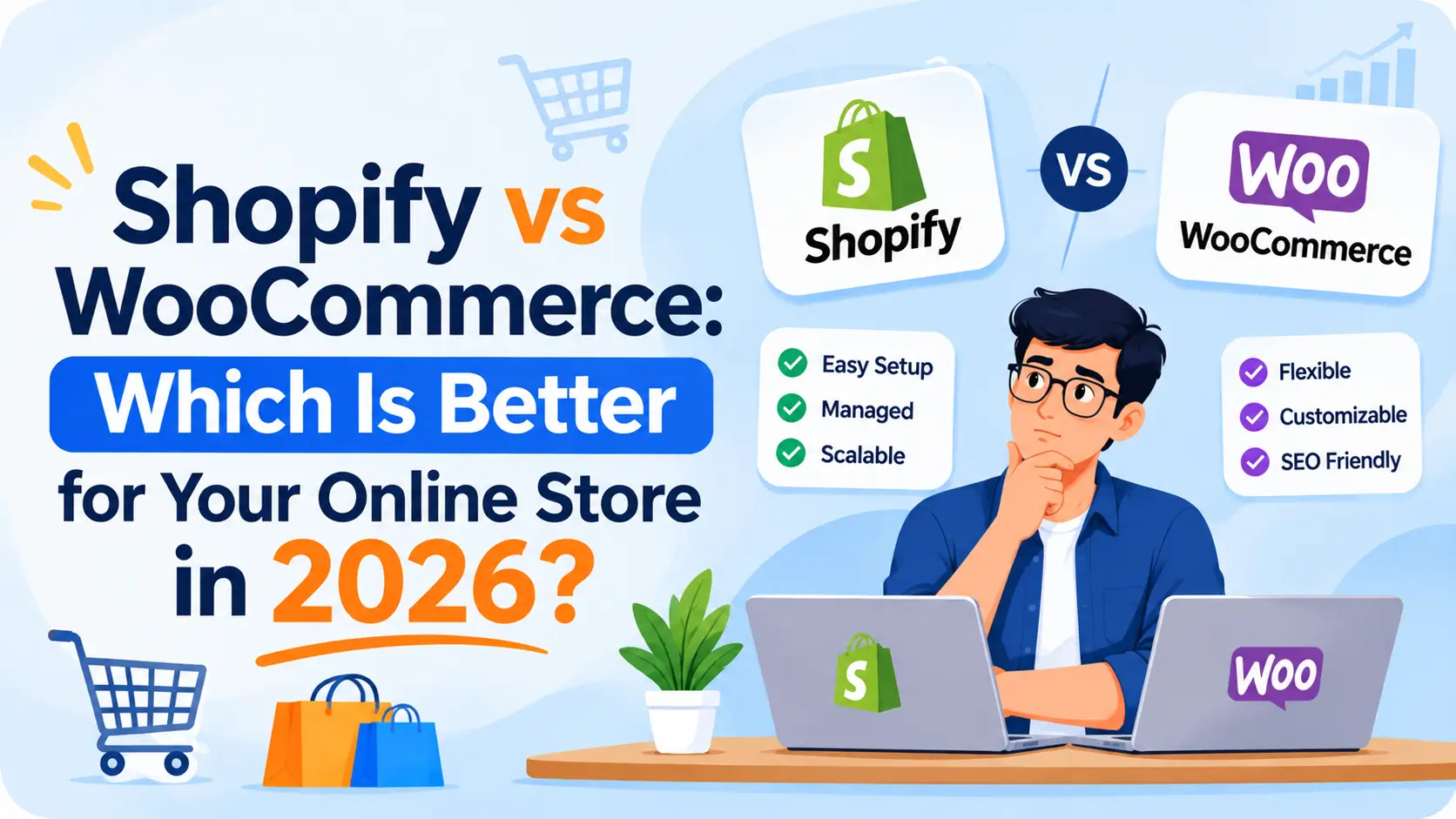
Planning to launch an eCommerce website but confused between Shopify and WooCommerce?
Both platforms are popular choices for building online stores. However, they work differently and offer different advantages depending on your business requirements, budget, and technical knowledge.
Shopify is a hosted eCommerce platform designed to simplify online store management, while WooCommerce is an open-source eCommerce plugin built for WordPress.
In this guide, we will compare Shopify vs WooCommerce in 2026 to help you choose the right platform for your online business.
Shopify is a hosted eCommerce platform that provides the tools required to build and manage an online store.
It allows businesses to manage products, orders, payments, shipping, and store design from one platform.
Key advantages of Shopify:
Shopify is suitable for businesses that want a managed platform and a relatively straightforward store management experience.
WooCommerce is an open-source eCommerce plugin for WordPress that converts a WordPress website into an online store.
It gives businesses greater control over their website’s hosting, design, and functionality.
Key advantages of WooCommerce:
WooCommerce is suitable for businesses that want flexibility and control over their online store.
| Features | Shopify | WooCommerce |
|---|---|---|
| Platform Type | Hosted platform | WordPress plugin |
| Setup | Relatively easy | Requires WordPress setup |
| Hosting | Included | Separate hosting |
| Customization | Themes, apps and development | Extensive flexibility |
| Maintenance | Platform-managed infrastructure | User-managed website maintenance |
| SEO | Built-in SEO features | WordPress SEO plugins and tools |
| Payments | Supported payment providers | Multiple supported gateways |
| Scalability | Plan and architecture dependent | Hosting and architecture dependent |
| Technical Knowledge | Less technical management | More technical control |
| Pricing | Subscription-based | Core plugin is free; other costs apply |
She best platform depends on your business requirements rather than one platform being universally better.
Cost is an important factor when selecting an eCommerce platform.
Shopify Costs
Shopify generally involves:
The advantage is that hosting infrastructure is included in the platform subscription.
WooCommerce Costs
WooCommerce generally involves:
The core WooCommerce plugin is free, but running a professional store still involves other expenses.
Which is cheaper?
A basic WooCommerce store may have lower initial platform costs, but hosting, maintenance, extensions, and development must be considered.
Shopify offers more predictable platform infrastructure costs, although apps and development can add to the budget.
Shopify
Shopify offers professionally designed themes and supports storefront customization.
You can customize layouts, colors, product pages, banners, and other elements. Advanced changes may require Shopify Liquid, CSS, JavaScript, and app integrations.
WooCommerce
WooCommerce provides extensive design flexibility through WordPress themes, page builders, plugins, and custom development.
You can customize almost every part of the website, depending on your technical setup and development requirements.
Winner: WooCommerce offers greater overall control, while Shopify offers a more managed customization experience.
Both platforms can support SEO when configured properly.
Shopify SEO
Shopify provides essential SEO features such as:
WooCommerce SEO
WooCommerce benefits from WordPress’s content management capabilities and its SEO ecosystem.
It supports:
Winner: Both can perform well in search engines. WooCommerce offers greater flexibility for advanced content and SEO customization, while Shopify provides convenient built-in SEO tools.
Shopify manages its core hosting infrastructure and platform security.
With WooCommerce, website owners are responsible for maintaining their hosting environment, WordPress installation, themes, plugins, backups, and security configurations.
Both platforms still require good security practices, including secure passwords, access control, and regular monitoring.
Winner: Shopify generally requires less infrastructure maintenance from the store owner.
Choose Shopify if:
Choose WooCommerce if:
Yes. Businesses can migrate their online stores between these platforms.
Depending on the migration requirements, the process may include transferring:
Migration should be carefully planned to avoid data loss, broken links, and unnecessary search engine ranking issues.
Shopify and WooCommerce are both powerful eCommerce solutions, but they serve different business needs.
Shopify is a good option for businesses looking for a managed online store with simpler technical administration.
WooCommerce is a strong option for businesses that want greater flexibility, customization, and control through WordPress.
Before choosing, consider your budget, technical requirements, business model, and long-term growth plans.
Webscos provides Shopify and WooCommerce website development solutions for businesses that want to establish or grow their online stores.
Our team can help you evaluate your requirements and plan an eCommerce website that fits your business goals.
Contact Webscos today to discuss your eCommerce website project.
Website: https://www.webscos.com/
Shopify is better suited to businesses that prefer managed infrastructure, while WooCommerce is suitable for businesses that need more flexibility and control.
The core WooCommerce plugin is free, but hosting, domain registration, premium extensions, and development may involve additional costs.
Both platforms support SEO. WooCommerce offers more flexibility through WordPress plugins and content management tools.
Razorpay integration availability depends on the platform, current provider support, account eligibility, and configuration. Check the latest integration requirements before choosing.
Shopify is generally easier for beginners who want a managed platform. WooCommerce may require more setup and maintenance knowledge.
Yes. Both can support growing stores when the platform setup, hosting or subscription, integrations, and store architecture are appropriate.
We have worked width some of the best innovative ideas and brands in the world across industries

